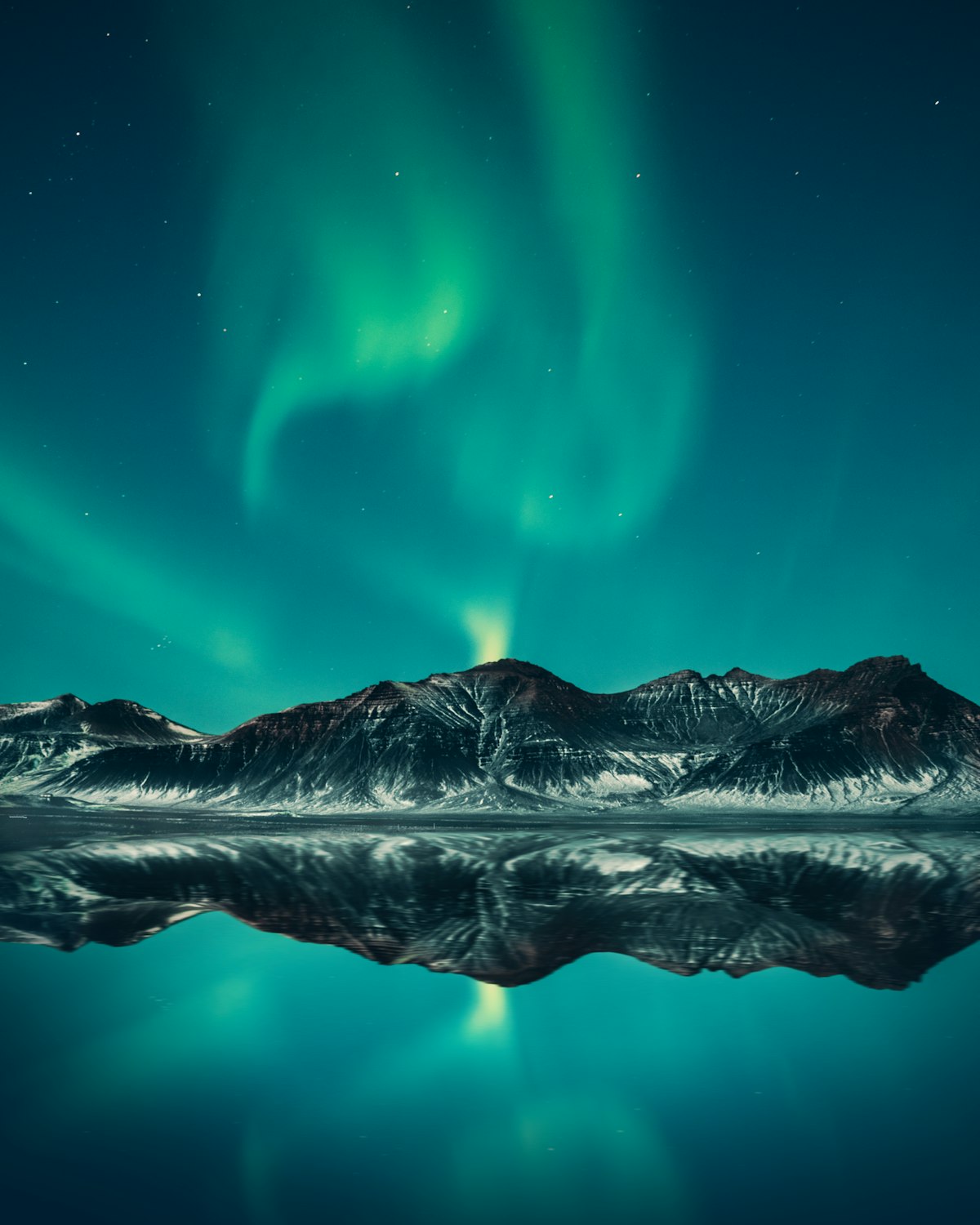
Two Rare Sky Events, One Extraordinary Month
On the afternoon of August 12, 2026, the moon’s shadow sweeps across Iceland during the first total solar eclipse the country has witnessed since 1954. Three weeks later, as Iceland’s nights grow dark again, the first aurora of a new season will appear over the same landscapes.
For anyone planning to travel to Iceland in summer 2026, this sequence is the defining reason to plan carefully. Eclipse visitors who leave before late August will miss the opening of one of the strongest aurora seasons in years. Those who stay — or return in September — arrive at exactly the moment Solar Cycle 25 delivers the most dramatic skies of the decade.
The August 12 Eclipse: What Iceland Will See
Iceland sits inside the path of totality for the August 12 solar eclipse, making it one of the best-positioned destinations in Europe for the event. Totality lasts up to 2 minutes and 18 seconds at the most favourable sites.
The path runs directly over some of the most photogenic and darkest corners of the country:
- Westfjords — Látrabjarg Cliffs hold the longest land-based totality in Iceland at 2 minutes and 13 seconds. This remote peninsula has minimal light pollution and open Atlantic horizons — already one of the highest-scoring aurora locations in our forecast.
- Snæfellsnes Peninsula — The glacier-capped peak of Snæfellsjökull and Kirkjufell Mountain both fall inside the totality zone. Duration here ranges from 90 to 120 seconds depending on exact position, and a four-day eclipse festival runs on the peninsula from August 12 to 15.
- Reykjavík — The capital city sees totality for the first time since 1433. Duration is shorter, around 60 to 90 seconds, but the city’s infrastructure handles large visitor numbers well.
- Reykjanes Peninsula — The area south of Keflavik Airport also lies within the totality path, making it easily accessible for eclipse visitors arriving by air.
The next total solar eclipse visible from Iceland will not occur until 2196. No one alive today will have another chance from this location.
Why Eclipse Spots Are Also Iceland’s Best Aurora Locations
The overlap between the eclipse totality path and Iceland’s premier aurora viewing spots is not a coincidence. Both phenomena reward the same geography: low light pollution, open horizons, and minimal coastal cloud cover. Snæfellsjökull, Látrabjarg, and Kirkjufell are consistently among the top-scored locations in our live forecast precisely because of these characteristics.
Visitors who base themselves in the Westfjords or on Snæfellsnes for the eclipse will be optimally positioned when aurora season opens. The same dark skies and unobstructed views that make these sites exceptional for totality make them exceptional for northern lights.
When Does Aurora Season Open?
The midnight sun ends in late August. By the final week of August, Reykjavík has roughly 14 hours of darkness per night, and astronomical twilight is short enough that bright aurora is clearly visible to the naked eye. Spots in the Westfjords reach usable darkness a few days earlier.
In practical terms: a visitor who departs Iceland on August 14 will miss the first aurora nights by approximately two weeks. A visitor who stays until late August, or returns in September, arrives precisely when conditions become favourable.
September adds a scientific advantage. The Russell-McPherron effect — a well-documented interaction between solar wind geometry and Earth’s magnetosphere around the autumn equinox — statistically boosts geomagnetic activity each September. Combined with Solar Cycle 25’s continued proximity to its peak, September 2026 is set up as an exceptional month for aurora activity. For a full explanation of the solar cycle context, see our Solar Cycle 25 guide.
Planning the Ideal Iceland Sky-Event Trip
Eclipse-only (arrive August 10, depart August 14–15): Focus on the Westfjords or Snæfellsnes for maximum totality duration. The Látrabjarg peninsula requires a full day’s drive from Reykjavík, so plan to arrive the day before. Snæfellsnes is two and a half hours from the capital and a more practical base if time is short.
Eclipse-plus-aurora (arrive August 10, depart mid-September): After the eclipse festival, relocate to Reykjavík or the South Coast. By late August, aurora alerts will begin appearing in the app. A five-week stay comfortably covers both events, and the eclipse crowd will have thinned considerably by late August, leaving the spots quieter.
Aurora-only, early season (arrive late August or September): Eclipse visitors will have largely departed. You will have Iceland’s best dark-sky spots largely to yourself during what could be one of the strongest aurora opening months in recent years.
Last-Minute Viewing: Where to Actually Stand on August 12
With the eclipse close and the island effectively sold out, the question has shifted from where do I book to where do I stand on the day. Three things decide it.
You need a clear west-southwest horizon, not just open sky. Totality in Reykjavík begins at 17:48 GMT (Iceland keeps UTC year-round — no daylight-saving math), and the sun is only about 24 degrees above the horizon, low in the west-southwest. A ridge, a headland, or a row of buildings on your western side will block the corona even under a perfectly clear sky. Judge a viewing spot by what is in front of it to the west, not by how big the sky looks overhead.
Arrive absurdly early, then stay put. The Icelandic Road and Coastal Administration begins traffic management at 08:00, and roads west of Reykjavík will be the worst of the day. Official guidance is to be in position two to three hours before the partial phase opens — partials begin around 16:45. Parking on roads and road shoulders is banned outright on eclipse day and illegally parked cars are towed at the owner’s expense, so use a designated gathering site with real parking. Staying put for a while after totality does more to ease the jam than leaving fast does.
Know the closures on your route. In the capital area, Suðurgata (at Hringbraut) and Ægisíða close to traffic from 15:00 to 20:00, as does Suðurströnd on Seltjarnarnes; Álftanesvegur and Suðurnesvegur in Garðabær go one-way over the same hours, and the streets around Víðistaðatún in Hafnarfjörður close with shuttle buses running instead. In the Westfjords, Road 612 to Látrabjarg runs one-way from 12:00, Road 614 to Rauðasandur is one-way as well, and Bolafjall above Bolungarvík is shuttle-only. Services across the west will be swamped — carry your own food, water, warm layers, and a full tank.
Shut out of August 12 lodging entirely? This is the movable-date payoff, and it is the reason we keep writing about both events together. Eclipse-week rooms are priced at several times the normal rate, and that pressure collapses within about a week. Shift your nights later instead of scrambling for August 12, and you trade a sold-out, triple-priced window under a sky that is still too bright for aurora for darker nights, ordinary rates, and the actual reopening of aurora season. Our honest trip-extension guide gives the day-by-day dates, and the triple sky event breakdown covers how the Perseid peak fits into the same 48 hours.
Check the Forecast Before You Drive
Weather and cloud cover are the decisive factors for both events. For the eclipse, a single overcast layer will block totality completely. For aurora, the same applies.
The live aurora forecast updates every five minutes with cloud cover data from weather stations across Iceland and OVATION probability scores for all 100+ viewing locations. The Aurora Iceland app sends push notifications when conditions improve at spots near you — set up alerts now so you are ready when the first good-visibility forecast appears in late August.
Iceland in August 2026 offers two events that will not coincide again in any living person’s lifetime. The eclipse lasts two minutes. The aurora season that follows it lasts six months. Plan accordingly.