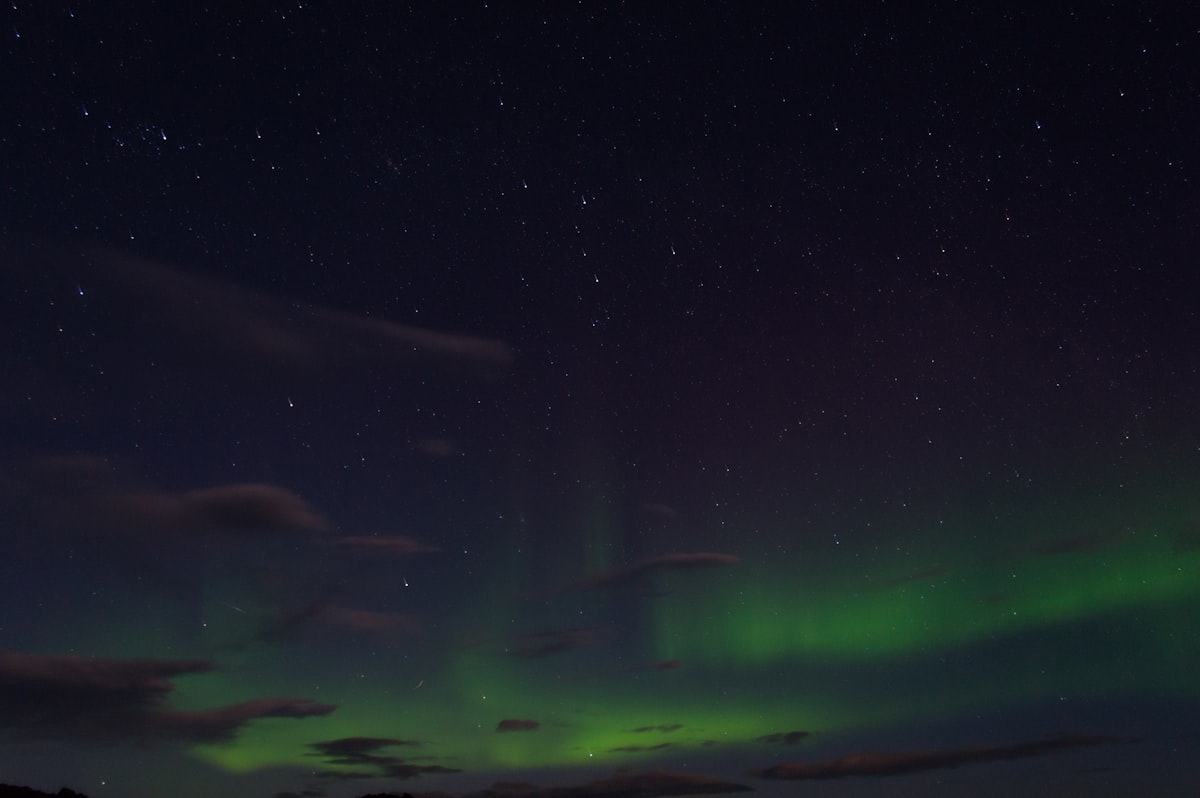
“Last Chance” Headlines Are Overstating It
If you have been researching an Iceland trip, you have probably seen the warnings: 2026 is your last chance to see the northern lights. Tour operators and a few aurora apps lean on this line hard, and it works because it creates urgency. It is also, to be blunt, misleading.
Here is the honest version. The sun runs on an 11-year activity cycle, and the current one — Solar Cycle 25 — passed its peak in late 2024. That is true. What the scare headlines leave out is that the years after a solar peak are historically among the very best for aurora chasers. The peak is not a cliff edge. Activity does not switch off the day the sunspot count starts falling. If anything, the next two to three years are when some of the most dramatic displays of the entire cycle tend to arrive.
So is 2026 still a good year to see the northern lights in Iceland? Yes — genuinely, not as a sales pitch. Let us walk through why.
The Peak Has Passed — and That’s Not the Problem It Sounds Like
Solar maximum is the period when the sun’s magnetic field is most tangled and most productive: more sunspots, more solar flares, more coronal mass ejections (CMEs) hurled toward Earth. NOAA’s Space Weather Prediction Center placed the peak of Solar Cycle 25 around 2024, and observed sunspot numbers have since begun their slow, uneven decline.
But “decline” here means a gradual taper over years, not a sudden drop. Sunspot numbers in 2026 remain well above the cycle’s quiet baseline. More importantly, the raw sunspot count is not the same thing as geomagnetic activity at Earth — and the second one is what actually paints the sky. The connection between the two is loose enough that some of the strongest storms on record have landed during the declining years, not at the headline peak.
Why the Declining Phase Still Delivers Spectacular Auroras
There is real solar physics behind this, and it is worth understanding so the “last chance” framing stops working on you.
- Coronal holes open up. As the cycle winds down, large, long-lived coronal holes develop on the sun. These fire fast, persistent streams of solar wind that sweep past Earth and trigger geomagnetic activity — often on a recurring 27-day rhythm as the sun rotates. This is a declining-phase specialty.
- Big storms cluster after the peak. Solar Cycle 23 peaked around 2001, yet produced the famous Halloween Storms of October 2003 — two years into the decline. The pattern of major storms arriving on the downslope shows up across multiple cycles.
- The field gets messier, not calmer. As the sun transitions toward minimum, its magnetic field grows more complex and prone to sudden, sharp eruptions rather than steady output. Unpredictable is not the same as weak.
We go deeper into the mechanics in our piece on Solar Cycle 25 and the 2026 aurora season. The short version: declining does not mean over. It means the sun trades a high, steady hum for occasional, violent bursts — and those bursts are exactly what produce full-sky displays over Iceland.
What This Actually Means for Your Iceland Trip
For someone planning an aurora trip this autumn or winter, the practical takeaway is reassuring: 2026–2027 sits firmly inside the strong part of the cycle. You are not catching the tail end of something. The baseline activity is elevated, the declining-phase storm potential is real, and Iceland’s high latitude means you do not even need a major storm — a moderate Kp 3 or 4 is enough to light up the sky from a dark spot.
The thing that will actually make or break your trip is not the solar cycle. It is darkness and weather, both of which you can plan around:
- Darkness: Iceland’s season runs from late August to mid-April. The long, genuinely dark nights of October through February give you the widest viewing windows. Our October 2026 forecast breaks down how the early-season nights stack up.
- Weather: Cloud cover is the number-one reason people miss the lights — far more than weak solar activity. The single most useful skill is being willing to drive 30–60 minutes to find a clear patch of sky.
In other words, by 2026 the sun is doing its part. Your job is to be under a dark, clear sky when it performs.
How to Know If Tonight Is Actually Worth It
Cycle-level context is for deciding whether to come. Deciding whether to head out tonight needs real-time data. Three numbers matter:
- Kp index — the global geomagnetic activity scale (0–9). Kp 3+ produces visible aurora in Iceland.
- Bz — the orientation of the solar wind’s magnetic field. A strongly negative Bz cracks open Earth’s magnetosphere and amplifies everything.
- Cloud cover — the variable that overrides all the others if you are standing under an overcast sky.
If those terms are unfamiliar, our guide to reading an aurora forecast explains each one plainly. And rather than juggle three dashboards, the live aurora forecast in the Aurora Iceland app folds all of it into a single 0–100 score for each of 104 monitored spots, updated every five minutes using real-time solar wind, OVATION output, and live vedur.is cloud data — so you can see which specific location is both clear and active right now.
The Honest Bottom Line
2026 is not a last chance. It is a very good chance, sitting in the part of the solar cycle that has historically rewarded aurora hunters most. The “last chance” headlines are urgency marketing, not science. The real countdown that matters is the one on any given clear, dark night when the Kp climbs — and that is the one our forecast is built to catch.
Download the Aurora Iceland app and turn on alerts, or check the Tonight page for the current forecast at your location. Come this autumn or winter, stay mobile, and let the data tell you when to look up — because the sun is still very much putting on a show.