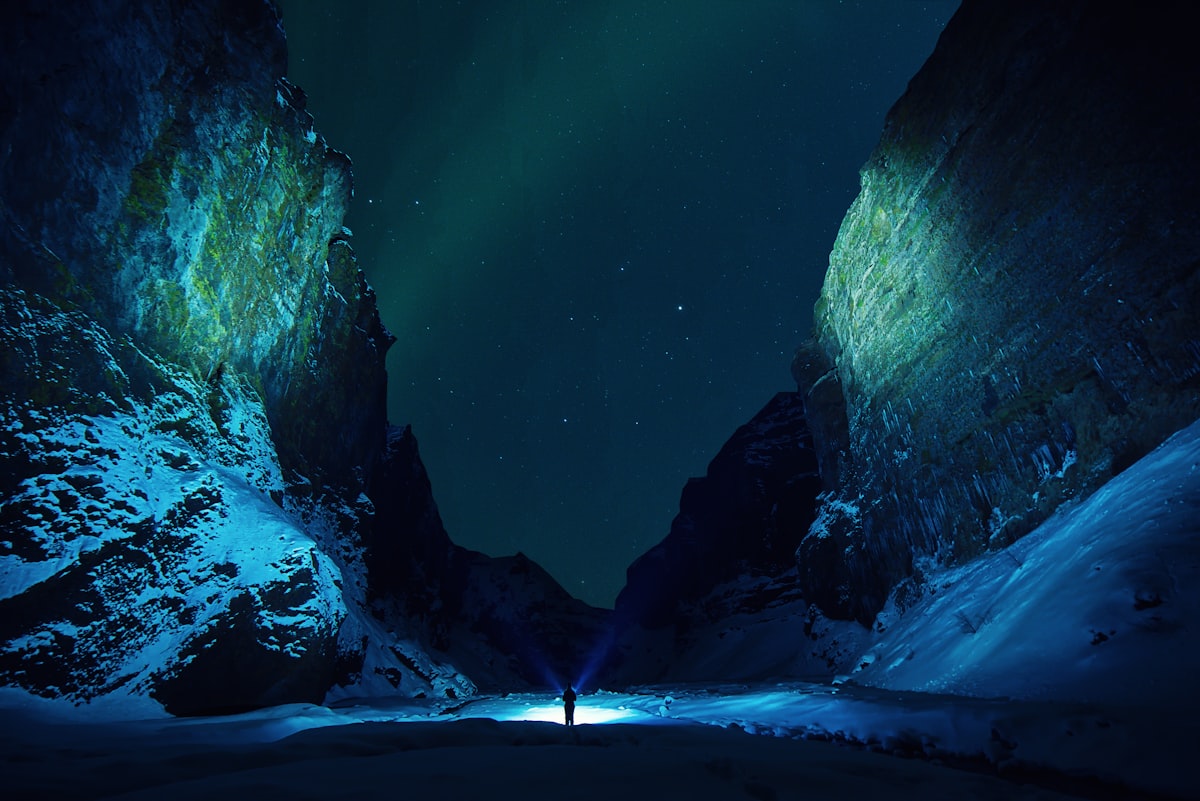
A rental car is the most powerful aurora tool most travellers never think of as one. It lets you leave when the forecast sharpens, drive away from town light, and — most importantly — reposition when the clouds move. But a car alone does not find the northern lights. A plan does. This guide is the self-driver’s planning playbook: how to structure the night, when to leave, and how to turn a road trip into a genuine aurora chase.
If you are still deciding whether to rent at all, start with our tour or self-drive comparison. This piece assumes you have the keys and want to use them well.
Plan Around Darkness and Clouds, Not Distance
The biggest mistake self-drivers make is planning an aurora night like a daytime sightseeing route — pick the furthest, most dramatic spot and drive to it. Aurora planning runs on two different variables: darkness and cloud cover. A closer dark spot under a clear sky beats a famous one under overcast every single time.
So build your night in layers:
- Anchor on a dark spot you can reach in under an hour. From Reykjavík that means Þingvellir (45 minutes east) or the Reykjanes lighthouses. You want to be out of the city light dome, not necessarily deep in the highlands.
- Keep a fallback in a different weather zone. If your anchor clouds over, you need somewhere to go that sits under a different front — inland if your first choice was coastal, or vice versa.
- Save the trophy locations for clear, settled nights. Places like Kirkjufell on Snæfellsnes or Jökulsárlón on the south coast make unforgettable foregrounds, but they are two to five hours out. Commit to them only when the whole route is forecast clear.
The reason cloud matters more than Kp is covered in depth in our guide to chasing a clear sky when the forecast says cloudy. The short version: Iceland’s fronts move fast, so a 30-minute drive routinely crosses from overcast into open sky.
When to Leave Town: Timing Your Night
Aurora is a night-owl’s pursuit. Two timing rules matter for self-drivers:
Aim for the magnetic-midnight window. Geomagnetic activity over Iceland tends to peak roughly between 22:00 and 01:00, when your location rotates under the most active part of the auroral oval. That is your prime driving-and-watching window — though bright substorms can fire anytime after dark, so get into position early rather than late. We break the hour-by-hour pattern down in the best time of night to see the northern lights.
Leave with a buffer. Give yourself 30–45 minutes of driving margin so you are parked and dark-adapted before the peak, not still on the road. Your eyes need about 20 minutes in darkness to see faint aurora properly, and every glance at a bright phone screen resets that clock.
Fuel up before you leave the city. Rural stations close early, and you do not want range anxiety dictating how far you can chase a clearing.
Driving Iceland at Night: The Practical Layer
Self-driving in aurora season (late August through mid-April) means night driving in cold conditions. A few things keep it safe and pleasant:
- Winter tyres come standard on rentals from roughly November to April. Secondary and gravel roads still get icy and unlit — slow down, and check road.is for live conditions before committing to any route.
- Park fully off the road. Use marked pull-offs and car parks, never the shoulder of Route 1. Iceland’s roadsides are narrow and other aurora hunters drive them in the dark.
- Kill your lights while watching. Headlights and even parking lights wreck everyone’s night vision, including yours. Find the switch that turns off daytime running lights.
- Dress for standing still, not driving. You will be motionless in coastal wind for long stretches. Our winter packing list covers the stillness-specific gear — hand warmers, a wind shell, and a red-filter headlamp so you can see the map without blinding yourself.
Turn the App Into Your Co-Pilot
This is where a self-drive night becomes a real chase. A static afternoon forecast is useless by 22:00, but live per-spot data tells you exactly which direction to point the car.
The Aurora Iceland app scores more than 100 individual viewing spots every five minutes, combining OVATION aurora probability, live solar wind, and real cloud observations from met.is weather stations. Instead of guessing, you can see that your anchor spot has clouded over to “Low” while a location 25 minutes away is scoring “Good” — and simply drive toward the better number.
A practical rhythm for the night:
- Before leaving, open the Tonight page and note which region is scoring best.
- Drive to your anchor spot and settle in.
- If cloud rolls in, re-check the map and reposition to the nearest spot still scoring well.
- Watch the community sightings feed — a real person reporting a green band nearby beats any model.
The Bottom Line
Self-driving turns the aurora from a fixed appointment into a moving target you can actually pursue. Plan a dark anchor and a weather-zone fallback, leave town with a timing buffer before magnetic midnight, drive the winter roads with care, and let live spot scores decide your direction once you are out there. If you are weighing how many nights to budget for the attempt, our guide on how many nights you need sets honest expectations.
Download the Aurora Iceland app or open the Tonight page before you set out, and let the clear sky — not the map pin — decide where you drive tonight.