The 2025-26 Aurora Season Has Closed
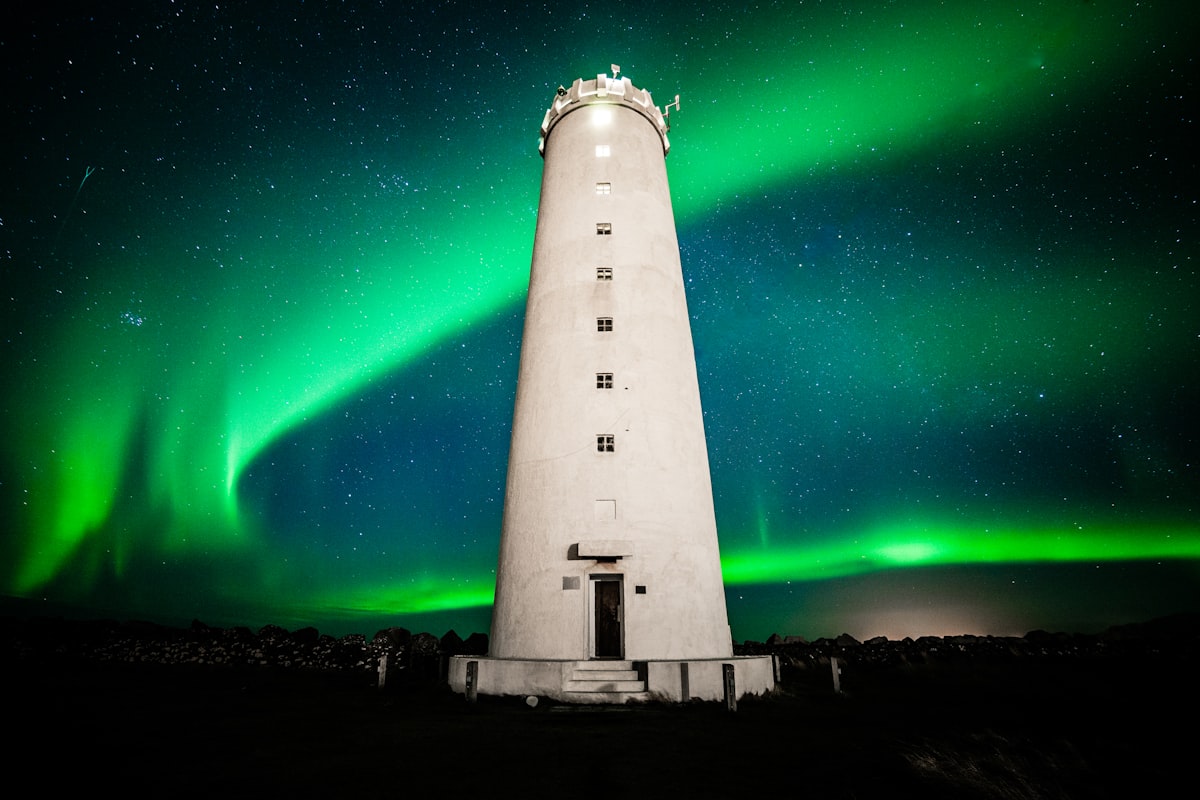
On April 17-18, a powerful G2 geomagnetic storm — driven by a coronal hole stream and peaking at Kp 6 — lit up Icelandic skies from Reykjavik to the Westfjords in what turned out to be the final major display of the 2025-26 season. Witnesses at Grótta and along the Reykjanes coast described it as one of the most striking shows in years: vivid green and purple curtains visible even from the city centre. You can read the full account in our storm recap.
By late April, Iceland’s midnight sun takes over. The sun barely dips below the horizon, and after early May it does not fully set for several weeks. Without true astronomical darkness, there is no visible aurora — even during periods of elevated solar activity. The season is over.
If you missed it this year, here is exactly when to plan your return.
Why the Northern Lights Disappear in Spring
The aurora itself does not stop. Solar wind keeps striking Earth’s magnetic field year-round. The problem is light.
Northern lights need a genuinely dark sky. In Iceland, by late April the sun rises before 5 AM and sets close to midnight. During peak midnight sun (late May through mid-July), the sky never darkens beyond civil twilight. No amount of solar activity will produce a visible aurora against that pale horizon glow.
Can you see the northern lights in Iceland in summer? The short answer is no — and that article explains exactly why. If you are visiting between late April and mid-August, aurora hunting is off the table.
When the Northern Lights Return: Late August 2026
Darkness comes back gradually, and in two stages that are worth separating. From mid-August the sky reaches nautical twilight — the sun 12° to 18° below the horizon — for a short window around 01:00. In Reykjavík that is about an hour on 16 August, three hours by the 25th, five by the 31st. It is dark enough for a bright display and not dark enough for a faint one.
True astronomical night — the sun a full 18° down — arrives about two weeks later: 31 August on the south coast, 2 September in Reykjavík, 6 September in Akureyri, 8 September in Ísafjörður. Almost every guide collapses these two into one date and tells you astronomical darkness returns in August. It doesn’t.
The season opening window is roughly August 20 to September 10, with the second half of it being the genuinely dark part.
This is when the first displays of the 2026-27 season typically appear. Early-season shows tend to be briefer and lower on the horizon than the dramatic storms of midwinter, but for visitors eager to catch aurora after a summer trip, late August is genuinely achievable.
By September, darkness expands quickly. On the autumn equinox (September 23 in Iceland time), Iceland has nearly equal day and night, and by October the nights are long enough for multi-hour viewing sessions from even the most remote spots on the island.
Why September 2026 Is Exceptional
September is already statistically one of the strongest months for aurora activity in Iceland, and 2026 adds two additional reasons to target it.
The equinox effect. Geomagnetic activity reliably spikes around the spring and autumn equinoxes — a well-documented phenomenon known as the Russell-McPherron effect. Earth’s magnetic field geometry aligns more favorably with the solar wind in March and September, increasing the frequency and intensity of geomagnetic storms independent of the solar cycle. September aurora displays are, on average, stronger than those in January despite January having far longer nights.
Solar Cycle 25 remains elevated. The 2025-26 season confirmed that Solar Cycle 25 is one of the most active in two decades — the April 17-18 G2 storm being its final flourish. Solar cycles do not collapse overnight. September 2026 sits in the declining-but-still-elevated phase: meaningfully more active than the quiet years of 2019-2020, and still capable of producing strong storms at short notice.
Eclipse visitors have a ready-made reason to extend. If you are already planning to be in Iceland for the August 12 total solar eclipse, stay into late August or September and you arrive precisely as the aurora season opens with solar activity still running high. The same locations offering totality — Snaefellsnes, Reykjanes, and the Westfjords — are among Iceland’s best aurora viewing spots. One trip, two extraordinary sky events.
Extending is also the cheap version of a second trip: you have already paid for the flights. The constraint is beds, not seats — August 2026 accommodation near the totality path is being taken now, so Snæfellsnes and Reykjanes are worth settling early, along with a car for the aurora nights that follow.
Some links in this guide are affiliate links: we earn a commission if you book, at no extra cost to you. It never affects what we recommend or how we score a spot.
Get Notified When the Season Opens
The practical preparation is straightforward.
Download the Aurora Iceland app and you will have real-time scores for 137 individually assessed viewing spots across Iceland the moment the season resumes. Rather than checking a single Kp index number and guessing whether the sky is clear, you will see which specific spots — Þingvellir, Grótta Lighthouse, Kirkjufell, or wherever suits your itinerary — have both the activity and the clear skies to deliver a display right now.
Bookmark the live aurora forecast as well. It updates every five minutes when the season is active and is the fastest way to know whether tonight is the night to head out.
The 2025-26 season was exceptional: four significant storms, a G2 close, and widespread displays across the northern hemisphere. The 2026-27 season, opening in late August against a still-active solar cycle and the afterglow of the August eclipse event, is set up to be just as rewarding for those who plan ahead.