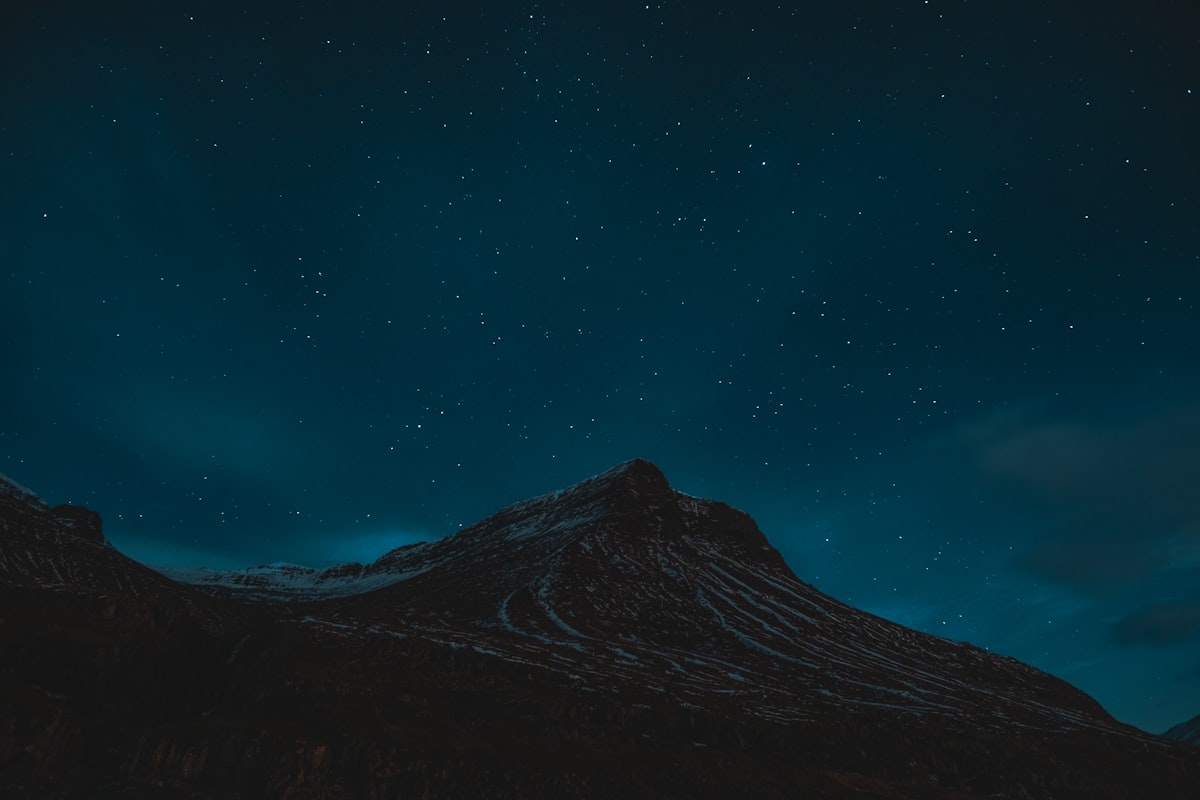
Three Sky Events, One Iceland Night
The calendar has done something unusual for August 2026. On August 12, a total solar eclipse sweeps across Iceland — the first since 1954. The very same night, August 12-13, the Perseid meteor shower reaches its annual peak. And within the following two weeks, Iceland’s nights finally darken enough for the first northern lights of the new aurora season.
Three of the sky’s most sought-after phenomena, stacked onto roughly the same 48 hours. No competitor guide frames all three honestly together, and the honesty matters: each event needs different conditions, and they do not all become visible on the same dark night. Here is what you will actually see, and when.
The Total Solar Eclipse: Twilight in the Afternoon
The eclipse is the anchor event. On the afternoon of August 12, the moon’s shadow crosses Iceland, with totality arriving around 17:48 local time. Iceland keeps UTC year-round, so there is no daylight-saving math to do — the times you read are the times on the ground.
Totality lasts up to 2 minutes and 18 seconds at the most favourable sites along the path, which runs over the Westfjords, the Snæfellsnes Peninsula (including Kirkjufell), Reykjavík, and the Reykjanes Peninsula south of Keflavík. For a full breakdown of the path and the best viewing bases, see our August 2026 eclipse guide.
One thing the eclipse is not: a chance to see the aurora. Totality plunges the sky into an eerie twilight, not true astronomical darkness, and it lasts barely two minutes. But that has become the most-asked question of eclipse week, so it deserves a proper answer rather than a one-line dismissal.
Can You See the Aurora During Totality?
Almost certainly not — and it is still worth ten seconds of your two minutes. Both halves of that sentence are true, and most of the coverage this week gives you only one of them.
Start with the physics, because it settles the question. Totality is not night. The eclipse happens in the late afternoon, with the Sun still around 24 degrees above the western horizon from Reykjavík at 17:48. The sky during those two minutes goes to something like deep twilight — dark enough for the brightest planets and a genuinely eerie experience, nowhere near dark enough for the aurora, which needs a properly black sky to register against. Add to that the geomagnetic conditions: as of August 9 the Sun is quiet, with NOAA forecasting no geomagnetic storms and a Kp index of only 2 to 3 through eclipse week. For aurora to break through during totality you would need a cloud-free sky, a coronal mass ejection arriving to spike activity at almost exactly the right hour, and a display bright enough to beat eclipse twilight — three things lining up in a two-minute window. Icelandic astronomy communicator Sævar Helgi Bragason puts the odds of it at a very weak possibility, and that is the honest ceiling. There are no confirmed reports of aurora ever being observed during a totality, at any eclipse, anywhere.
So why look at all? Because this eclipse is the first whose path crosses the auroral zone, and scientists genuinely want the data. NASA heliophysicist Liz MacDonald — founder of the citizen-science project Aurorasaurus — will be observing from the Snæfellsnes Peninsula with an all-sky fisheye camera recording the whole sky through totality. Aurorasaurus is asking eclipse chasers across Iceland and Greenland to briefly scan the sky away from the Sun during those two minutes and report what they see. The part people miss: reporting that you saw nothing is just as useful. A clear-sky observation confirming no aurora tells scientists what the conditions actually were, which is exactly the kind of negative result that never gets collected because nobody thinks it counts.
A safety note, since this involves looking up: scanning the sky is only safe during totality itself, once the Sun is fully covered. The moment the first sliver of sunlight returns, eclipse glasses go back on. Do not take them off during any partial phase.
If you do look, log it. The Aurora Iceland app has a community sightings feed built for precisely this — a timestamped, located observation from someone who was standing there — and a “clear sky, no aurora seen” report on August 12 is a legitimate entry. And if you want to understand why nobody, including us, will give you a firm aurora probability for a specific two-minute window days ahead, our guide to how accurate the aurora forecast really is explains where the reliable horizon ends.
The realistic plan for eclipse day stays the same: watch the eclipse for the eclipse. Treat any aurora as a lottery ticket you did not pay for.
The Perseids: Meteors in the Returning Dark
The Perseid meteor shower peaks the same night, August 12-13, radiating from the constellation Perseus in the northeast.
And there is a detail almost every eclipse guide skips, because it hides in plain sight: a total solar eclipse can only happen at new moon. The moon has to pass directly between Earth and the Sun to cast the shadow. That means the night of August 12-13 is also a 0% illumination, completely moonless night — the moon sets with the Sun and never comes back up. No moonlight washing out the sky at all.
That coincidence is why 2026 is being written up as the best Perseid year in roughly a decade. In most years the peak is compromised by moonlight to some degree. This year the only thing standing between you and the meteors is cloud.
Iceland in mid-August still comes with a real caveat, and it is bigger than most Perseid guides admit. Sunset on August 12 is at 21:56, but the sun only reaches about 8° below the horizon at its lowest that night — that is civil twilight, one tier short of even nautical. Reykjavík’s first genuinely usable window is 16 August, and full astronomical darkness does not arrive until 2 September. The darkest stretch on eclipse night runs roughly 23:00 to 04:00 and the sky stays visibly blue through it. In practice you will catch the brightest Perseids and the fireballs, but not the faint background drizzle of meteors a darker month would give you.
Time it properly and the difference is significant. Activity climbs through the night as the radiant rises, and the best hours are 01:00 to 04:00 on August 13, when Perseus is highest. A dark rural site under clear sky in that window is realistically looking at 50 to 75 meteors an hour, and more if conditions are perfect.
The fix is the same one that unlocks the aurora: extend your trip past the eclipse. Each night after August 12, Iceland gains darkness fast, and the Perseids keep producing stragglers for a week or more after the peak under an increasingly black sky.
The First Aurora: Why You Need the Late-August Nights
Aurora season in Iceland reopens over the second half of August — our guide to the northern lights in Iceland in August 2026 breaks down the reopening night by night. By the final week, Reykjavík has a real window: 23:32–03:26 on the 25th, 22:57–03:59 on the 31st. That is nautical twilight, dark enough for a bright aurora to show clearly to the naked eye but not for the faintest arcs, which have to wait for true astronomical night on 2 September. On eclipse night itself the sky is still far too bright and the season has not begun — do not expect northern lights on August 12.
This is the single most important planning point for an eclipse trip. A visitor who flies home on August 14 misses the first aurora nights by about two weeks. A visitor who stays into late August, or returns in September, arrives precisely when the lights switch on — and the extension is cheaper than it sounds, because the accommodation crunch collapses once the eclipse crowd flies out. Late-August availability in the Þingvellir corridor sits at ordinary rates rather than eclipse-week ones. (Affiliate link: we earn a commission if you book, at no extra cost to you. It never affects what we recommend or how we score a spot.) September adds a scientific bonus: the Russell-McPherron effect statistically boosts geomagnetic activity around the autumn equinox, and with Solar Cycle 25 still elevated, autumn 2026 is set up to be exceptional. Our September 2026 forecast and our honest trip-extension guide lay out the day-by-day calendar.
How to Catch a Clear Sky for All Three
For every one of these events, the deciding factor is the same: cloud cover. A single overcast layer hides totality, the Perseids, and the aurora equally well. The one question that actually matters on the ground is where will the sky be clear tonight?
Be realistic about the odds and then plan around them. Mid-August in Iceland is historically cloudy on the order of 70 to 80 percent of days, and on a sunny eclipse afternoon convective cloud tends to build inland along the middle of the peninsulas. Sites within sight of the sea are generally the better bet on the day. But climatology only narrows the search — it cannot tell you which valley is clear at 23:00.
That is exactly what we built. The live aurora forecast updates every five minutes with real-time cloud observations from weather stations across Iceland and scores all 137 viewing locations individually — so when the coast is socked in, you can see which valley or peninsula has a hole in the clouds and drive to it. The Aurora Iceland app sends push alerts when conditions improve near you, which becomes invaluable in late August as the first aurora nights arrive.
August 12, 2026 gives you a once-in-a-lifetime eclipse and a meteor peak in the same 24 hours. Stay a little longer, and the northern lights complete the set. Plan the trip to span all three, set up your alerts, and let the clear-sky data decide where you stand.