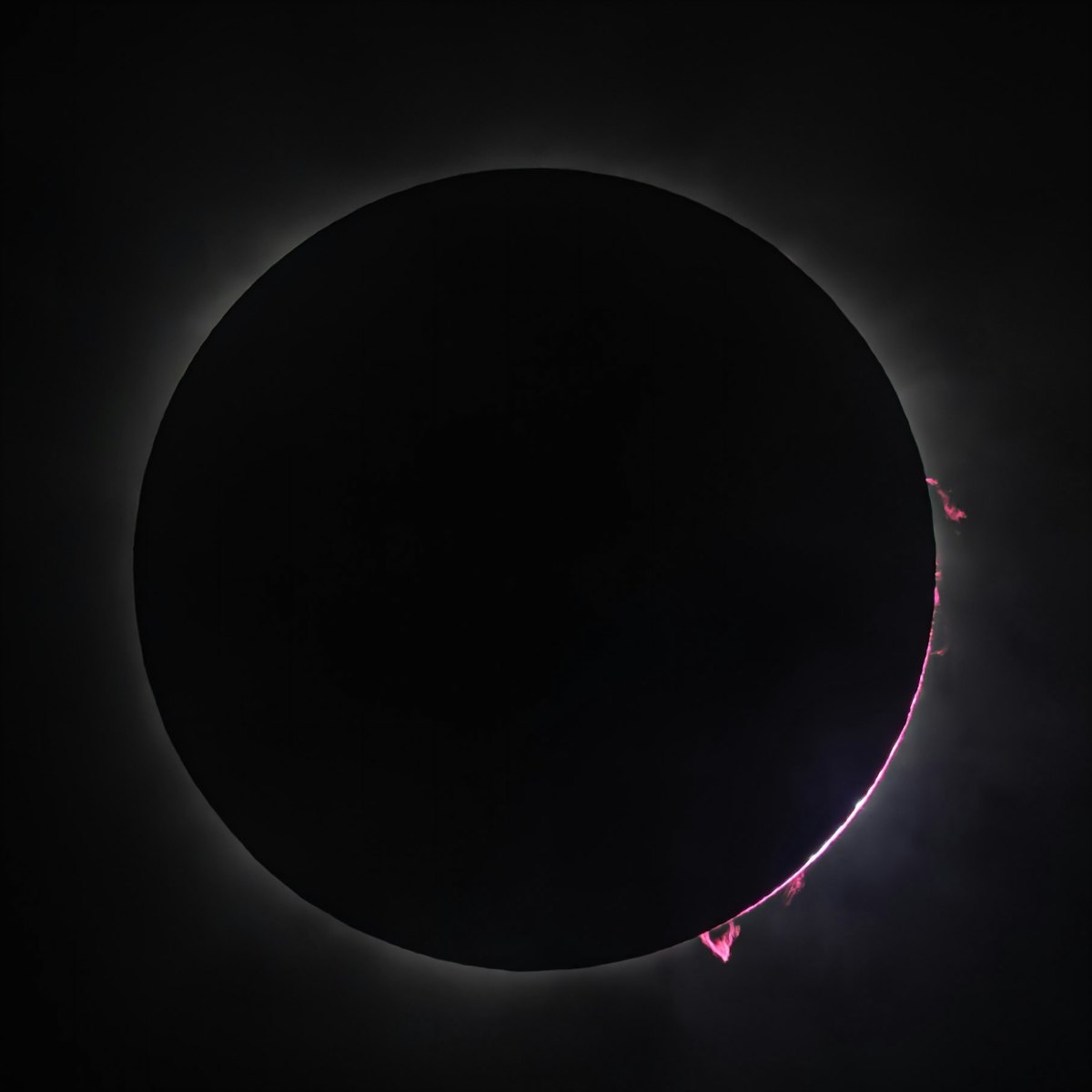
Iceland’s total solar eclipse happens this afternoon. If you are already here, the questions have changed: nobody is asking about hotels any more, they are asking where the clouds will break, whether to drive west, and what time to be standing outside.
Here are the answers, in the order they actually matter today.
This page was written at 11:30 on 12 August 2026. Weather, road closures and site capacity all change through the day — recheck the live sources linked below before you commit to a plan.
1. The Cloud Forecast: Be Honest With Yourself
This is the question everyone is asking, and the answer is not the one anyone wants.
The Icelandic Met Office’s dedicated eclipse forecast, issued at 23:00 last night, describes cloudy and wet conditions across much of the path of totality. Its specifics:
- Best chance of breaks: around Breiðafjörður, particularly in the Westfjords. The north of that area looks brightest.
- Little chance of breaks in southwestern Iceland, including the capital region and Reykjanes.
The Met Office attaches a caveat that deserves repeating in full, because it is the single most important sentence today: small gaps in a forecast cloud map should be treated with caution, because the forecast indicates that breaks may develop somewhere within an area — it cannot tell you where.
That means a clear pixel on a cloud map over a specific fjord is not a promise, and it is not a destination. Check vedur.is and the Met Office’s eclipse cloud layer at gottvedur.is before you decide anything, and treat what you see as odds, not a plan.
One consolation worth knowing: even under complete overcast, totality is not nothing. The daylight drains away in a way that is genuinely startling, the temperature drops, birds react, and the horizon lights up in a strange 360-degree twilight. You will not see the corona through thick cloud. You will still know something enormous happened.
2. Stay in Reykjavík, or Drive West?
The trade-off is duration against everything else.
Reykjavík gives you just over a minute of totality, plus buses, food, toilets, shelter, and organised viewing areas. Farther west gives you longer totality — up to a bit over two minutes at Látrabjarg in the Westfjords — plus heavier traffic, fewer services, limited parking and controlled roads.
For most visitors, Reykjavík or the surrounding capital area is the better balance today, and the weather does not clearly argue otherwise: yes, the Westfjords have the better cloud odds, but they are a five-to-six hour drive away and Visit West Iceland’s own guidance discourages same-day travel into the region and back out again.
If you are not already west, today is probably not the day to start driving west. A chase that leaves you on a congested road at 17:48 is the one outcome that is guaranteed to be worse than standing still under cloud.
If you are already out west, stay put and use local forecasts. You are in the better place.
3. Roads, Parking and Arrival
Expect road closures between roughly 15:00 and 20:00 in various areas, along with one-way systems and controlled access in western regions.
The operational advice from every official source is the same, and it is boring on purpose:
- Go to a designated viewing area. Do not stop or park on a roadside or a road shoulder.
- Arrive early — Visit Reykjavík suggests being in place 2–3 hours before the partial phase starts.
- Leave the car behind if you can. In the capital, Strætó buses, walking or cycling will all beat parking.
- Stay put afterwards. Everyone leaves at once. Let it disperse.
- Follow police and road-authority instructions, including redirection to a different site.
4. Exact Times
For Reykjavík, in local time (Iceland is on GMT year-round):
| Phase | Time |
|---|---|
| Partial eclipse begins | 16:47 |
| Totality begins | 17:48:12 |
| Maximum | 17:48:48 |
| Totality ends | 17:49:18 |
| Partial eclipse ends | 18:47 |
That is 66 seconds of totality in Reykjavík. Totality runs longer the farther west you are.
Do not copy these times to another location — check a location-specific map for wherever you will actually be standing. A minute matters when the whole event is a minute long.
5. Eye Safety — the One Thing You Cannot Improvise
This is the section to read twice.
- Wear certified eclipse glasses (ISO 12312-2) or use a safe handheld solar viewer during every part of the partial phase.
- Ordinary sunglasses are not safe. Not stacked, not polarised, not very dark ones. They are not eclipse viewers.
- You may remove protection only during complete totality, when the Sun’s bright face is entirely covered — in Reykjavík, that is the 66 seconds from 17:48:12 to 17:49:18.
- Put the glasses back on the instant any part of the Sun reappears.
- No certified glasses? Use indirect projection — a pinhole in card projecting onto a second surface. Never look through the pinhole.
- Cameras, phones with zoom lenses, binoculars and telescopes need a purpose-built solar filter on the front during partial phases. Your eclipse glasses protect your eyes, not your optics — and looking through an unfiltered optical device while wearing eclipse glasses is dangerous.
Under thick cloud the Sun can look deceptively dim. That does not make it safe to stare at during the partial phases.
6. Where to Stand in the Capital Area
The designated viewing areas, with basic amenities including toilets and food trucks:
- Seltjarnarnes — Suðurströnd
- Reykjavík — Ægisíða
- Garðabær — Álftanes, the shoreline west of the sports area
- Hafnarfjörður — Hamarinn and Ástjörn
- Mosfellsbær — Tungubakkar
Pick a primary and a nearby backup before you leave. If your site is full, go to the backup — do not drive site to site looking for a space once the roads are busy.
Quick Answers
Is 99% almost as good as totality? No. A deep partial eclipse and a total eclipse are qualitatively different events — the corona only appears inside the path of totality. That said, this is not a reason to make a dangerous last-minute drive today.
What should I bring? Warm waterproof layers, food, water, any medication, and a charged phone. Fuel or charge the car first. Small communities will have limited shops, fuel and charging, and unusually high demand.
Can we sleep in the campervan near a viewing site? Only at an authorised campsite. Under Iceland’s Nature Conservation Act it is illegal to spend the night in a campervan outside a registered campsite or urban area without the landowner’s permission, and many campsites are at capacity.
Will traffic affect my flight? Allow substantial extra time to Keflavík. The airport has published its own guidance — an outdoor grassy viewing area near the terminal for arriving passengers, and specified terminal windows for departing passengers. Boarding obligations take priority over the view.
And Tonight? Not the Northern Lights
A total solar eclipse only happens at new moon, so tonight is also the darkest sky of the month and the Perseid meteor peak. It is a genuinely good night to look up.
But be clear-eyed about the aurora: Iceland does not have astronomical darkness yet. Real aurora season reopens in the final days of August. We wrote about what this night can and cannot deliver in our triple sky event guide, and if you are wondering whether to extend your trip, our honest trip-extension guide gives the real dates.
If you are staying into late August, the Aurora Iceland app scores 137 Icelandic viewing spots every five minutes against live cloud observations, and the Tonight page shows where the clearest sky is right now. Today, that same lesson applies with no technology at all: pick one good spot, get there early, and look up.
Clear skies — or failing that, a memorable darkness.