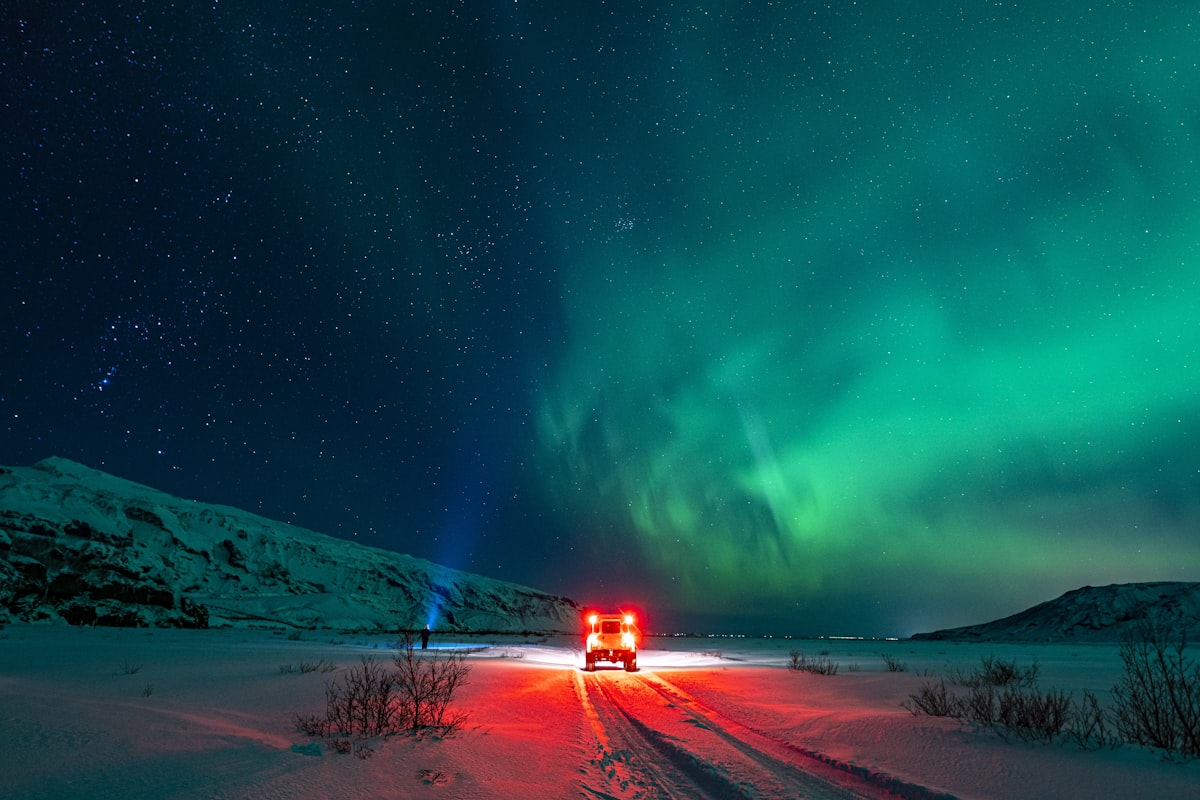
Almost every “7-day Iceland itinerary” you will find was written for summer and had the northern lights bolted on afterwards. It sends you around the full Ring Road, moving hotels every night, arriving somewhere new at dusk with 400 km behind you. That is a sightseeing plan. It is a poor aurora plan, because it leaves you exhausted, committed to one location per night, and unable to move when the clouds do.
This is the itinerary rewritten from the other direction: nights first, waterfalls second.
Some links in this guide are affiliate links: we earn a commission if you book, at no extra cost to you. It never affects what we recommend or how we score a spot.
The Three Rules This Route Is Built On
Drive less than you want to. Every hour of daylight driving is an hour you are not resting before a 23:00 start. This route keeps most days under 2.5 hours behind the wheel, which is roughly half what a standard Ring Road itinerary demands.
Stay two nights in one place wherever possible. A second night at the same base is a free retry. Clouds in Iceland are local and fast-moving, so the same spot can be hopeless on Tuesday and perfect on Wednesday.
Do not attempt the full Ring Road in winter. Seven nights is not enough to circle the island and still have functioning aurora nights, and the north-east passes close without much warning. This route runs south-east and back, which is the darkest, most spot-dense half of the country and keeps your escape routes open. If you want the north instead, read our North Iceland vs South Iceland comparison and pick one — not both.
The Route, Night by Night
Night 1 — Reykjanes. You land tired. Do not drive far. Base near Keflavík or Grindavík and walk out to Garðskagi lighthouse if the sky cooperates. Treat this as a bonus night, not a planned one.
Night 2 — Þingvellir and the Golden Circle. Drive the Golden Circle in daylight, then position at Þingvellir after dark: genuinely dark, wide northern horizon, dramatic foreground. Our guide to which Golden Circle stop is best after dark explains why Geysir’s steam and Gullfoss’s spray canyon work against you.
Nights 3 and 4 — the South Coast, based at Vík. Seljalandsfoss and Skógafoss by day, then two nights working Vík and Reynisfjara and the Dyrhólaey headland. This is your first double-night base, and the black-sand beach guide covers where to stand and the sneaker-wave rule you must not break in the dark.
Nights 5 and 6 — the south-east, based near Höfn. The long day of the trip: Vík to Höfn is about 270 km. Stop at Fjaðrárgljúfur, then Jökulsárlón and Diamond Beach, where floating ice reflects aurora better than almost anything in Iceland. On the second night drive 15 minutes east to Vestrahorn at Stokksnes — check the tide before you go, because the mirror pools only form on a falling tide. Full detail in the Vestrahorn guide.
Night 7 — the return buffer. Drive back west and base around Hella or Hvolsvöllur. Keep this night deliberately unplanned. If the trip has been clouded out, this is the night you spend chasing whatever is clear. If you have already seen a display, it is an easy last evening an hour from the airport.
Total driving: roughly 900 km over seven days. A standard Ring Road week is closer to 1,600 km.
The Weather Buffer Nobody Sells You
Package itineraries quietly assume every night works. They do not. Iceland is cloudy far more often than it is clear, and cloud — not aurora activity — is what decides your trip.
The buffer is structural, not optional. It means booking bases you can shoot from in two directions, keeping Night 7 empty, and being willing to abandon the plan. If Vík is socked in and the inland plains are open, you drive inland. That single decision is worth more than any photogenic location on your list, and it is the whole reason to rent a car rather than book a coach — the honest trade-off is laid out in our tour or self-drive comparison.
If you are still choosing where to sleep, our guide to choosing a dark-sky base matters more than any hotel roundup: a rural guesthouse you can step outside of at 01:00 beats a glass-roof room you booked six months early.
Practicalities
Book a 4x4 with winter tyres for any trip between October and April, and prioritise that over price. You can compare cars and campervans across 30+ Icelandic suppliers, and Northbound’s fuel-cost calculator will give you a realistic petrol budget for a 900 km week.
Fuel up before dark every day — rural stations close early, and range anxiety is the fastest way to talk yourself out of a chase. Check road.is before committing to any route — our winter road conditions and night driving guide explains how to read it, and when it goes stale. And dress for standing still in coastal wind rather than for driving, which is a different problem entirely; our winter packing list covers it.
Seven nights is a genuinely good number, by the way. Our analysis of how many nights you need puts a week comfortably above the point where the odds turn in your favour.
Let the Sky Pick Your Direction
An itinerary gets you into the right half of the country with the right car and enough nights. What it cannot do is tell you where to point the car at 22:30 on Night 4.
That is what live data is for. The Aurora Iceland app scores 137 individual viewing spots every five minutes using aurora probability, live solar wind, and real cloud observations from Icelandic weather stations — so when your base clouds over you can see which spot along the coast is still clear and drive to it instead of standing under grey sky hoping.
Plan the week with this route, then open the Tonight page each evening and let the clear sky choose the rest.