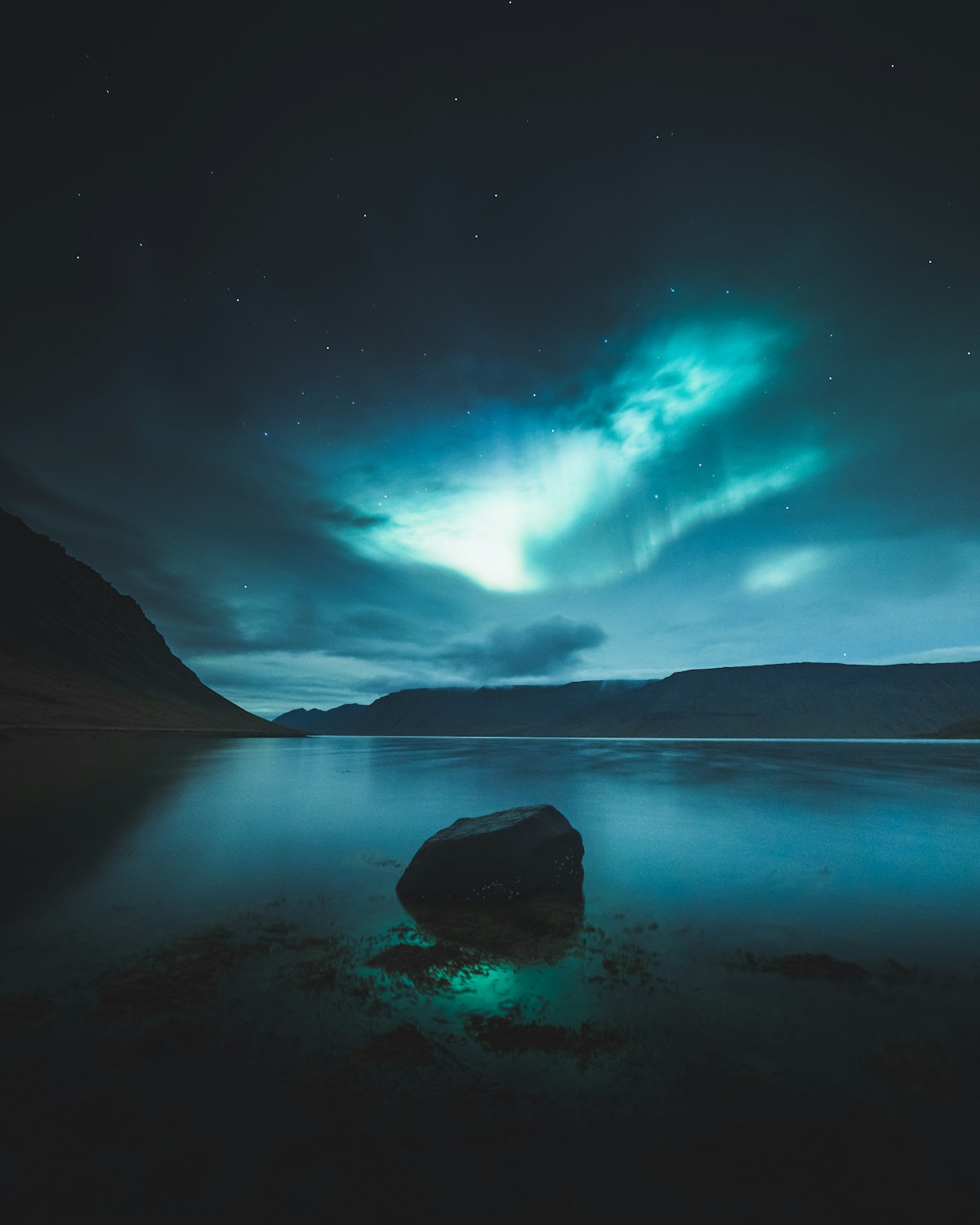
Most Missed Auroras Are Not Bad Luck
Every winter we hear the same sentence from visitors: the forecast was good, we drove out, and we saw nothing. Sometimes that genuinely is the sky’s fault. Far more often it is one of five specific, avoidable mistakes — and each one takes about thirty seconds to check before you put your boots on.
This is a checklist, not a lecture. Each mistake below links to the full explanation elsewhere on this site, so you can go deep on the one that applies to you and skip the rest.
Mistake 1: Chasing the Kp Number Without Checking Whether It Is Dark
This is the big one, and it is the mistake that quietly ruins the first and last nights of the season.
A Kp number tells you roughly how far the auroral oval has pushed toward the equator. It tells you nothing about whether the sky above you is dark enough to see anything. In late August, Reykjavík can sit under a perfectly respectable Kp 4 while the sun is still only 12 degrees below the horizon — deep twilight, not night. A faint arc is simply washed out. It is there; you cannot see it.
The other half of this mistake is the reverse, and it costs people even more nights: Kp 2 or 3 is routinely enough in Iceland. The country sits almost directly under the auroral oval, so most aurora advice written for the UK or the northern United States — where you need Kp 5 or higher — actively misleads you here. Travellers refresh an app waiting for a big number and skip perfectly good dark, clear nights.
Two checks fix it: our darkness dates by latitude tell you when real darkness returns where you are standing, and how to read an aurora forecast explains what the numbers actually promise.
Mistake 2: Reading Only the Low and Mid Cloud Layers
If you have found Iceland’s official cloud maps, well done — most visitors never do. But almost everybody then makes the same error: they check the low and mid cloud layers, see clear, and treat the night as a green light.
High cloud is the layer that quietly kills aurora nights. It is thin, it often looks like nothing on a satellite image, and it is more than enough to smear a faint display into an indistinct grey haze. It is also the layer most likely to be moving while the lower layers sit still.
The practical answer is to check all three layers and, more importantly, to treat cloud as something you drive around rather than something you accept. Our guide on what to do when the forecast says cloudy covers exactly how to find the hole in the cover.
Mistake 3: Picking One Spot, and Picking It for the Scenery
Choosing a single beautiful location and committing to it is the most understandable mistake on this list, and the most expensive. Iceland’s weather moves in bands. A spot that is socked in at 21:00 can be clear at 23:30, and a spot forty minutes away can be clear right now.
Two rules from people who do this all winter:
- Always have a second and third option, ideally in different weather zones. A dark spot you can reach in under an hour beats a spectacular one three hours away.
- Do not stand inside the town glow. Central Reykjavík will drown a faint arc. Grótta is walkable from the city and genuinely dark enough on a decent night; Þingvellir is 45 minutes east and much darker; Vík anchors the south coast.
If you are still deciding where to sleep, that choice matters more than the spot you drive to — see how to choose a dark-sky base.
Mistake 4: Going Out at 20:00 and Giving Up by 22:00
The aurora does not run on your dinner schedule. Activity tends to peak around magnetic midnight — roughly 22:00 to 01:00 Icelandic time — which is precisely the window most tired, cold, jet-lagged visitors have already abandoned.
Worse, aurora displays come in substorms: a quiet hour, then twenty dramatic minutes, then quiet again. Leaving during a lull is heartbreakingly common. Give the sky a proper window, and give your eyes 15 to 20 minutes of full darkness to adapt before you judge anything. One glance at a phone screen resets that. Full timing detail is in the best time of night to look.
Mistake 5: Expecting the Instagram Version
The last mistake happens even when everything else goes right. A faint aurora looks like a pale grey or silvery band, not electric green — your eyes are running on rod vision, which is effectively colour-blind in the dark. Plenty of visitors stand underneath a real aurora, decide it is “just a cloud,” and drive home.
The fix costs nothing: point your phone at it in night mode. If the screen shows green, it is aurora, and it is worth waiting to see whether it strengthens. Our honest guide to what the northern lights actually look like to the naked eye explains why the camera always sees more colour than you do — and it is physics, not fakery.
And accept the arithmetic: one night in Iceland is close to a coin toss. How many nights you need makes the case for planning three or more.
The Thirty-Second Version
Is it dark yet where you are? Is all three layers of cloud clear, or can you drive to somewhere that is? Do you have a backup spot? Are you out between 22:00 and 01:00, with your eyes adapted? And do you know you are looking for grey, not green?
That is the entire checklist. The Aurora Iceland app does the first three for you, scoring 137 individual spots every five minutes against live aurora data, real cloud observations, and actual darkness at that location. Check the live Tonight page before you head out — and then go and be patient in the cold, which is the one part nobody can automate.