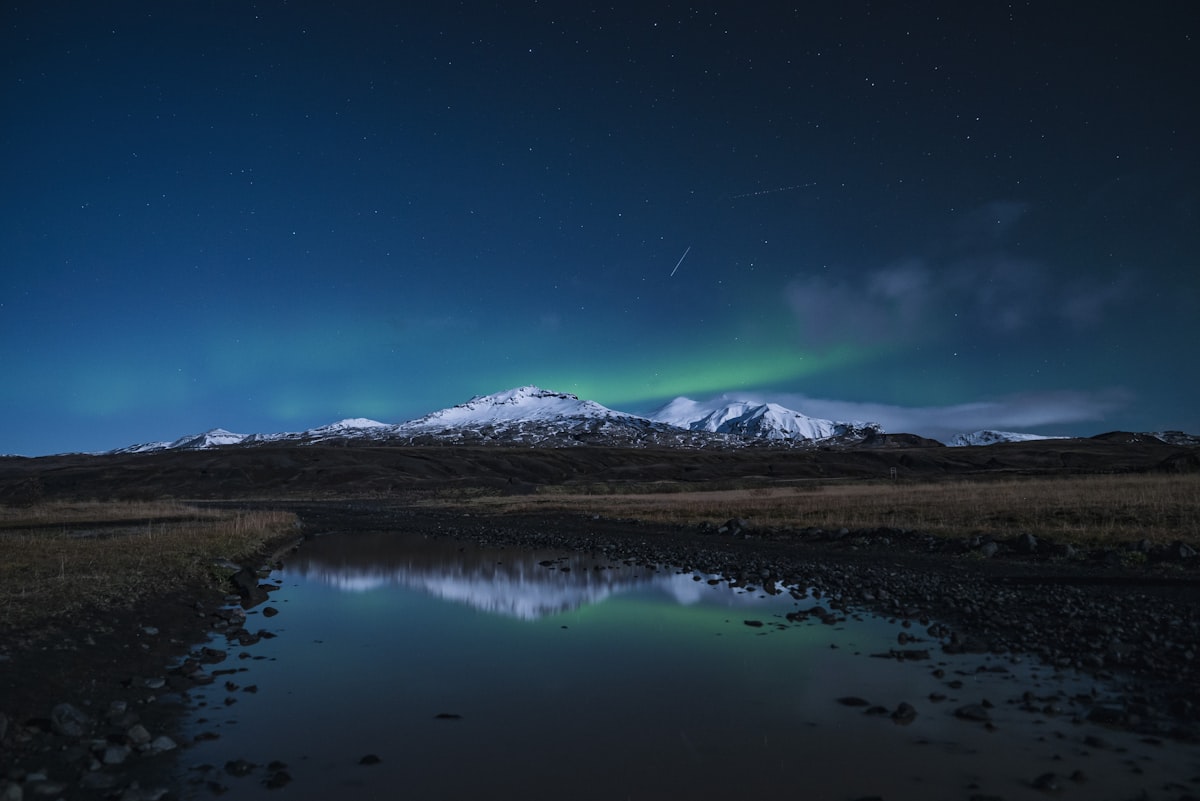
Yes, the Storm Is Real — and It Is Actually Two Storms
After a fortnight of almost nothing, the sun has finally done something. NOAA’s Space Weather Prediction Center issued a G2 (Moderate) geomagnetic storm watch on 26 August at 16:36 UTC, superseding all previous watches: G1 (Minor) on 27 August, G2 (Moderate) on both the 28th and 29th.
This morning’s 3-day forecast puts the greatest expected 3-hour Kp at 5.67, with the peak slots falling between 00:00 and 03:00 UTC on both the 28th and the 29th. For context on how unusual that is: the greatest Kp actually observed in the preceding 24 hours was 1, and every three-hour slot for the previous fortnight sat between 1.33 and 1.67. This is a real step change.
The watch comment explains the lumpy shape: “HSS on 27 + CMEs on 28-29.” Those are two different things arriving back to back. A coronal hole high-speed stream is a fast river of solar wind escaping through a gap in the sun’s magnetic field — it arrives gradually and grumbles on for a day or two. A coronal mass ejection is a discrete cloud of plasma thrown out by an eruption, and it hits like a hammer: sharp onset, bigger peak, shorter life. Thursday is the stream; the weekend is the impact.
So the storm is real, and it is the first genuinely interesting space weather of the 2026-27 season. Unfortunately, if you are standing in Iceland, it has arrived in close to the worst week of the year.
Iceland’s Problem: No Real Darkness, and a Moon That Never Sets
Two things have to be true before a storm becomes a sighting: the sky has to be dark, and it has to be unlit by the moon. Iceland currently fails both.
The aurora needs astronomical darkness — the sun at least 18 degrees below the horizon. We computed the sun’s altitude for each night of this storm. In Reykjavík it bottoms out at -16.1 degrees on the 28th, -16.5 on the 29th and -16.8 on the 30th. It never reaches -18. There is no astronomical darkness anywhere in Iceland during this storm, only nautical twilight. Reykjavík’s first true astronomical night is 2 September, as we set out in when aurora season actually starts, by latitude.
Then there is the moon, which settles it. The moon is full at 04:18 UTC on 28 August — the exact peak night. And it does not politely set: it rises at 20:47 and stays up until 07:50 the next morning, straight through the dark window.
| Night | Astronomical darkness | Twilight (nautical) | Moon-free dark hours | Moon |
|---|---|---|---|---|
| 27-28 Aug | 0.00 h | 4.40 h | 0.00 h | 100% |
| 28-29 Aug | 0.00 h | 4.60 h | 0.00 h | 99% |
| 29-30 Aug | 0.00 h | 4.78 h | 0.00 h | 96% |
Zero — not “somewhat compromised”. There is not one moon-free dark minute in Iceland across all three nights of this storm, in Reykjavík, Vík or Akureyri alike. This is exactly the scenario our guide to the moon and Iceland’s darkest nights exists to help people avoid.
One detail that surprises people: Akureyri, further north, gets less darkness than Vík — 3.82 hours against 4.90 on the peak night. In late summer the usual latitude logic runs backwards, because the further north you go, the later real darkness returns.
Update: this storm is forecast to return. The coronal hole behind the 27 August high-speed stream swings back into view one solar rotation later, and NOAA has pencilled in 24-26 September — see why the same aurora storm comes back 27 days later, and why Iceland’s moon is once again in the way.
Why New York Gets a Better Deal Than Reykjavík This Week
NOAA’s alert carries a line that will drive a lot of headlines over the next 48 hours: “Aurora may be seen as low as New York to Wisconsin to Washington state.”
That is accurate, and it produces a strange situation. Those places sit far south of the auroral oval and only get a show because the storm drags the oval down to them. But in late August they have something Iceland does not: actual night. A watcher in Michigan this weekend has a dark sky and a storm overhead. A watcher in Reykjavík has the storm, bright twilight, and a full moon in the middle of it.
For one week, the mid-latitudes are better placed than the Arctic. That inverts for good in about a fortnight, and does not invert back until spring.
There is a final twist. At the darkest moment of each night the sun sits at azimuth 0 degrees — due north, just 16 degrees below the horizon. The residual twilight glow is therefore concentrated in the northern sky, which is precisely where the aurora appears from Iceland. The brightest part of our sky is sitting on top of the part that needs to be darkest.
Should You Go Out Anyway? A Straight Answer
Not zero, but manage expectations hard. A G2 storm at 64 degrees north is bright, and a strong substorm can punch a green arc through nautical twilight. But you are far more likely to get a camera-visible aurora than an eye-visible one. If you are picturing the curtains from the brochures, this is not that night.
If you want to try, do it properly:
- Go between 00:30 and 02:30. The sky bottoms out around 01:30, and the storm’s strongest predicted slots are 00:00-03:00 UTC — the same window in Icelandic time. That alignment is the one lucky thing about this event.
- Face north and put the moon behind you. Through the whole dark window the moon tracks from south-southeast to south-southwest at only 12 to 21 degrees altitude, so facing north genuinely puts it at your back.
- Get away from town lights, since you can do nothing about the moon. Grótta Lighthouse is walkable from central Reykjavík; Þingvellir is darker if you have a car.
- Check the cloud first. A storm you cannot see through cloud is worth nothing, and Icelandic cloud varies enormously over short distances. Our Tonight page scores all 137 spots every five minutes on live cloud, solar wind and OVATION output.
If you want to understand what the numbers in any forecast mean, how to read an aurora forecast covers Kp, OVATION and the all-important Bz.
The Nights That Actually Matter Are Two Weeks Away
Treat this storm as a trailer rather than the film. It is real evidence that the sun has plenty left in the declining phase of Solar Cycle 25, and it arrives just as Iceland’s darkness returns.
The dates worth writing down: astronomical night returns to Reykjavík on 2 September, and the new moon falls on 11 September. Together those put the first genuinely dark, genuinely moonless nights of the season in the window of roughly 6 to 16 September. A storm like this one landing in that window is the show people fly to Iceland for. This one is the same storm with the lights left on.
How it turned out: the storm came in under forecast — planetary Kp peaked at 4.33, short of even a G1 — and a faint green display was photographed over Borgarnes anyway, at 22:40 on 28 August, under a 99% moon. That is the first aurora sighting logged in Iceland this season, and it makes the point above better than the forecast did: what limits Iceland at the end of August is light, not the sun.
The sensible move is not to stand outside in the moonlight this week, but to make sure you hear about the next one. Turn on notifications in the Aurora Iceland app: it alerts you when the solar wind turns favourable while the sky where you are is dark and mostly clear, or when aurora sightings are reported near you. And keep the Tonight page bookmarked for the moment the sky finally goes properly dark.